


In today’s fast-paced world, sleep often takes a backseat to our busy schedules. With work, social commitments, and the allure of digital entertainment, many of us sacrifice precious hours of rest. However, sleep is not a luxury; it’s a necessity. Understanding the importance of sleep and prioritizing it can have profound effects on our physical, mental, and emotional well-being.
Physical Health Benefits
Immunity Boost🤧
Sleep plays a critical role in maintaining a robust immune system. During sleep, the body produces cytokines, proteins that help fight infections and inflammation. Without adequate rest, our immune defenses weaken, making us more susceptible to illnesses like the common cold or flu.
Heart Health💖
Adequate sleep is essential for cardiovascular health. Sleep helps regulate processes such as blood pressure and cholesterol levels, both crucial for heart health. Chronic sleep deprivation is linked to an increased risk of heart disease, hypertension, and strokes.
Weight Management⚖️
Sleep influences the hormones that control appetite. Lack of sleep can lead to an imbalance in hormones like ghrelin and leptin, increasing hunger and cravings, particularly for high-calorie foods. This can contribute to weight gain and even obesity over time.
Mental Health Benefits
Cognitive Function🧠
Our brains require sleep to function optimally. During sleep, the brain processes information, consolidates memories, and removes toxins. Lack of sleep impairs attention, decision-making, and problem-solving skills. Over time, it can contribute to cognitive decline and increase the risk of neurodegenerative diseases like Alzheimer’s.
Emotional Well-being😎
Sleep is closely tied to emotional regulation. Insufficient sleep can lead to irritability, stress, and heightened emotional responses. Chronic sleep deprivation is associated with mood disorders such as anxiety and depression. A good night’s sleep can improve mood and resilience, helping you face daily challenges with a more positive outlook.
Tips for Better Sleep
- Stick to a Schedule: Try to go to bed and wake up at the same time every day, even on weekends.
- Keep Alcohol and Caffeine Moderate: Both will interfere with the quality of your sleep.
- Create a Relaxing Bedtime Routine: Engage in calming activities such as reading, meditating, or taking a warm bath.
- Watch Your Diet: Avoid heavy meals or drinking too much liquid close to bedtime.
- Limit Screen Time Before Bed: The blue light emitted by phones, tablets, and computers can interfere with your sleep. Try to disconnect at least an hour before bedtime.
- Do a Brain Dump: Whatever is in your brain, get it out and on to paper.
- Keep a Regular Sleep Schedule: Aim to be in bed before midnight and for at least seven hours each night of restful sleep.
- Exercise Regularly: Physical activity can promote restful sleep.
- Optimize Your Sleep Environment: Ensure your bedroom is dark, quiet, and cool. Consider comfortable bedding and a supportive mattress.
- Use White Noise: Turn on a fan, noise machine, or humidifier.
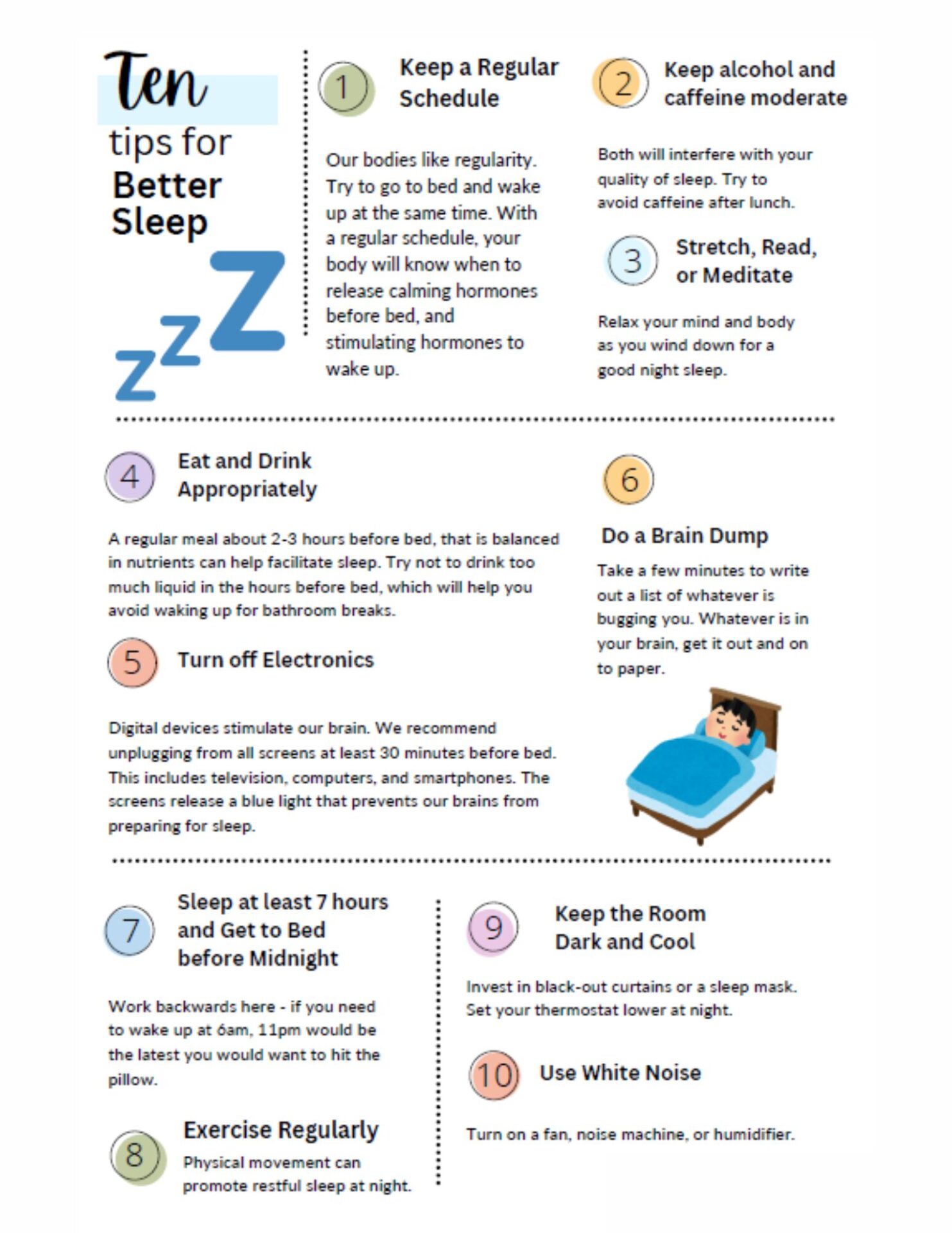
Click on the image above to download the PDF.
In Conclusion✅
Sleep is a fundamental pillar of health, as vital as diet and exercise. By prioritizing and improving our sleep habits, we can enhance our physical health, boost our mental clarity, and improve our emotional well-being. So, let’s commit to catching enough 💤 and wake up to a healthier, more energized life.