


🎥 Featured Video
🛝 Slides: How Shopping on Amazon Helps You Understand How to Lose Weight – Slides (opens in new tab)
👉 Related Post: Weight Management Works Like a Sink
👋 Introduction
Wouldn’t it be great if shopping on Amazon could help you lose weight?
While that would be amazing, it’s not that easy. However, by using the analogy of shopping we can gain a clearer understanding of the principles that make weight loss possible.
This article breaks down how the fundamental concept of budgeting your calories, much like budgeting your money on Amazon, plays a crucial role in managing your weight effectively.
🛒 The Hierarchy of Importance in Weight Loss
When it comes to weight loss, not all factors carry equal weight. Some elements matter very little unless bigger, foundational principles are already in place.
The Muscle and Strength Nutrition Pyramid is a great visual representation of what matters—and in what order—when it comes to nutrition for weight loss.
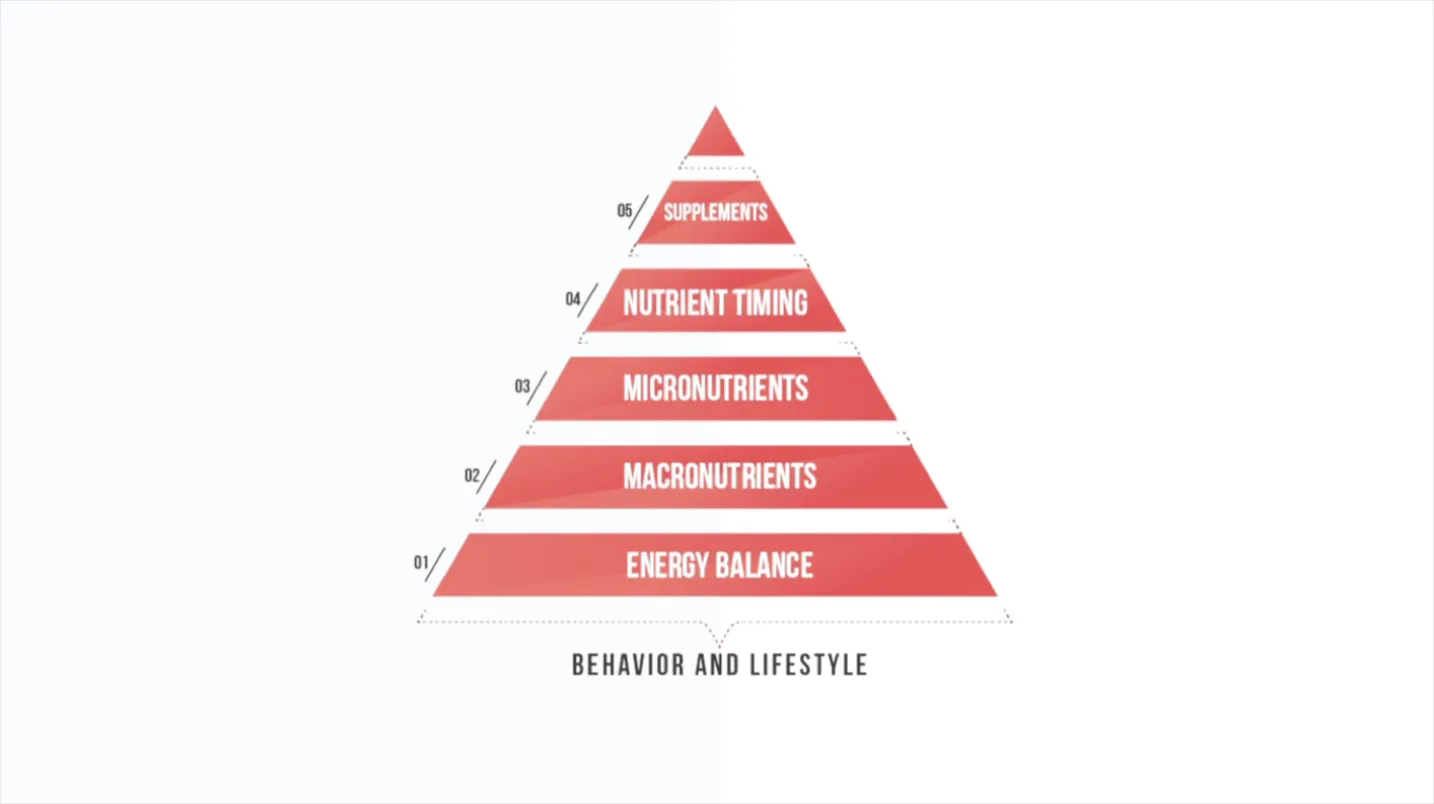
At the very base of the pyramid lies behavior and lifestyle consistency—without this foundation, nothing else really matters. You need regularity and sustainable habits before any dietary tweaks will have a meaningful impact.
Next up is the most critical factor: energy balance. This means your total calories consumed versus calories burned. This principle outweighs everything else, including the ratios of macronutrients (carbs, fats, proteins), micronutrients (vitamins and minerals), meal timing, and even supplements.
Many of us get this pyramid upside down. We chase supplements, obsess over meal timing, or dive into trendy diets like keto without first addressing the big picture: Are we consuming more calories than we burn? Without fixing this foundational piece, efforts to manipulate diet composition or timing often lead to frustration and little progress.
🚑 Prioritizing the Big Rocks First
Imagine going to the emergency room with a life-threatening injury. Doctors will address the critical issue first before worrying about minor scratches or splinters. The same logic applies to weight loss.
Focusing on supplements or the timing of meals when you’re not controlling your overall calorie intake is like worrying about a splinter while having a broken bone sticking out. First, you have to stop the “bleeding” — the overspending of calories.
Consistency in lifestyle factors such as good sleep, hydration, and some movement lays the groundwork to make your calorie budget work. Without this, you’re spinning your wheels.
💰 Calories Are Like Money: Budgeting Matters Most
Let’s bring this home with a financial analogy. When shopping on Amazon, you check the price of items before adding them to your cart and consider your bank balance. If you spend more than you have, you either go into debt or have to cut back.
Calories work the same way. Every bite you take has a “cost” in calories. If you eat more than your body can burn, you accumulate “calorie debt” in the form of stored body fat. Just like financial debt, this calorie surplus sticks around until you pay it off.
Overspending calories without awareness is like swiping a credit card without checking the statement—you accumulate debt without realizing it. To lose weight, you need to create a calorie deficit, just like you would need to budget to pay off financial debt.
🛍️ The Amazon Shopping Cart Analogy for Calorie Budgeting
Imagine you have a $2,000 daily budget to spend on Amazon. You add a TV, a generator, and a mixer to your cart, but the subtotal comes to over $3,000—way over budget.
If you proceed with the purchase, you’ll rack up debt. The items themselves aren’t bad; they just cost what they cost. The problem is simply that the total exceeds your budget.
Now, apply this to a 2,000-calorie daily diet. A few high-calorie foods can easily push you over your calorie limit, leading to weight gain. It’s not about labeling foods as “bad” but understanding their calorie cost relative to your budget.
By swapping out some higher-cost items for more affordable alternatives, you can stay within your budget and even have room to add more items. Similarly, choosing lower-calorie foods can help you eat more volume and feel fuller while still losing weight.
⏰ Meal Timing and Supplements: Minor Players in the Big Picture
Does it matter what time you add items to your Amazon cart? Not at all. The price remains the same no matter when you shop.
The same goes for meal timing and supplements in weight loss. Eating 500 calories after 8 PM doesn’t magically turn into 501 calories. Calories are calories, regardless of when you consume them.
While some people may experience digestive discomfort if they eat large meals right before bed, this is not a reason to worry about “metabolic penalties” of eating late. If you stay within your calorie budget for the day, meal timing won’t sabotage your progress.
🍽️ More Food Volume, Less Calorie Cost: The Key to Feeling Full
By choosing lower-calorie, more nutrient-dense foods, you can increase the volume of food you eat without exceeding your calorie budget. This often leads to feeling more satisfied and less hungry between meals.
For example, swapping out a calorie-dense fast food meal for a larger portion of vegetables and lean protein can help you stay within your calorie “budget” while still enjoying plenty of food.
This approach supports sustainable weight loss while avoiding the frustration of feeling deprived.
🔑 The Takeaway: Energy Balance is King
At the end of the day, the number one factor that determines weight loss is energy balance. You must consume fewer calories than you burn to lose weight. Everything else—macronutrient ratios, supplements, meal timing—is secondary and only meaningful after you have the basics in place.
Think of your calorie intake as your daily budget. If you’ve been “overspending” calories, it’s time to “stop the bleeding” and get on a calorie budget that supports your goals.
❤️ Like that analogy? You’ll love this one!
If you want to dive deeper into how weight management works like a sink—balancing intake and expenditure over time—there are additional resources available that explore this concept further.
Related Post: Weight Management Works Like a Sink
Remember, the math always adds up. Managing your calorie budget consistently with a solid lifestyle foundation is the most reliable path to weight loss.
🙌 Connect with Blues Fitness or the Dietitian Team
If you have questions or want to talk more about these concepts, feel free to reach out via the contact form to connect with a Blues Fitness Coach or Registered Dietitian.